

NGORONGORO CRATER
“It is impossible to give a fair description of the size and beauty of the crater, for there is nothing with which one can compare it. It is one of the Wonders of the World. The Ngorongoro crater is a huge zoological garden.” Bernard Grzimek
What is so special about Ngorongoro?
NCAA: The Ngorongoro Conservation Area in northern Tanzania enjoys world renown for its scenic beauty and its abundant wildlife. In 1980. it was listed by UNESCO as a World Heritage Site in recognition of its outstanding international value as a natural and cultural legacy. I Extending over some 8000 square km to the east of the Serengeti National Park, it includes the easternmost part of the vast Serengeti plains and the whole of the Ngorongoro highlands.
In the centre lie the Ngorongoro Crater, with its spectacular concentration of wildlife, and the Olduvai Gorge, famed for its fossil remains of early man.
Ngorongoro is also home to some of Tanzania’s only few indigenous tribes one of which is the Maasai of which there are 42000 in the area. Though much is known and written about the fauna and flora of the area and its prehistoric human and hominoid inhabitants, little is known about its present pastoral inhabitants, the Ngorongoro Maasai.
Current conservation policies in East Africa tend to assume that pastoral land use and resource conservation are incompatible. Yet it is now an accepted truth among ecologists and range scientists that the East African savanna with its teeming wildlife is to a great extent created by pastoral man and his domestic stock in interaction with wild grazing ungulates.

Ngorongoro Crater
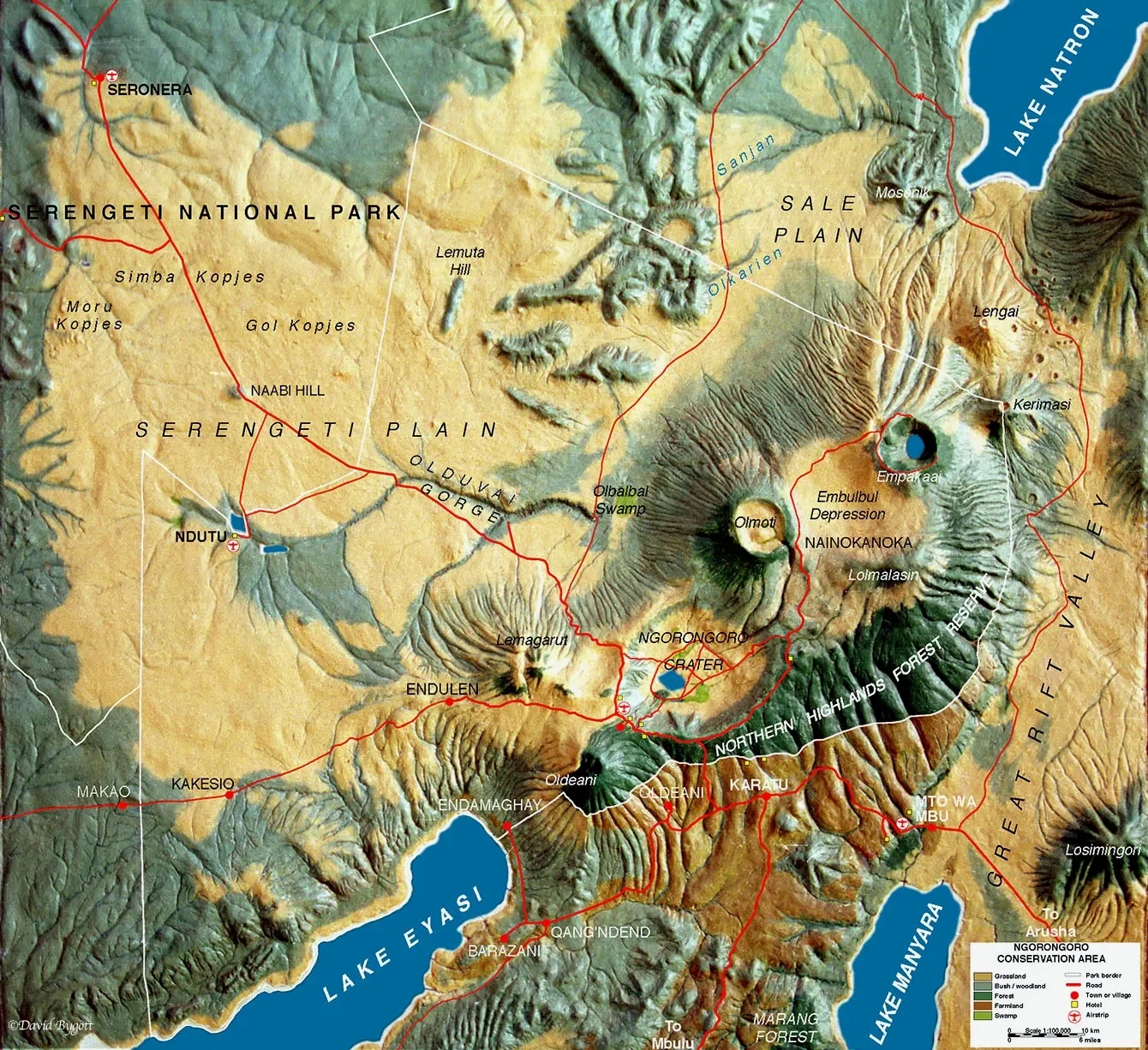
The main feature of the Ngorongoro Conservation Authority is the Ngorongoro Crater, the world’s largest inactive, intact and unfilled volcanic caldera. The crater, which formed when a large volcano erupted and collapsed on itself two to three million years ago, is 610 metres (2,000 feet) deep and its floor covers 260 square kilometres (100 square miles). Estimates of the height of the original volcano range from 4,500 to 5,800 metres (14,800 to 19,000 feet) high. The crater floor is 1,800 metres (5,900 feet) above sea level. The crater was voted by Seven Natural Wonders as one of the Seven Natural Wonders of Africa in Arusha, Tanzania, in February 2013. The Ngorongoro volcano was active from about 2.45 to 2 million years ago. Volcanic eruptions like that of Ngorongoro, which resulted in the formation of Ngorongoro Crater in Tanzania, were very common. Similar collapses occurred in the case of Olmoti and Empakaai, but they were much smaller in magnitude and impact.
Out of the two recent volcanoes to the northeast of the Empakaai caldera, Kerimasi and Ol Doinyo Lengai, Doinyo Lengai is still active and had major eruptions in 2007 and 2008. Smaller ash eruptions and lava flows continue to slowly fill the current crater. Its name in Maasai means ‘Mountain of God’.
The Munge Stream drains Olmoti Crater to the north and is the main water source draining into the seasonal salt lake in the center of the crater. This lake is known by two names: Makat as the Maasai called it, meaning salt; and Magadi. The Lerai Stream drains the humid forests to the south of the Crater and feeds the Lerai Forest on the crater floor – when there is enough rain, the Lerai drains into Lake Magadi as well. Extraction of water by lodges and Ngorongoro Conservation Area headquarters reduces the amount of water entering Lerai by around 25%.
The other major water source in the crater is the Ngoitokitok Spring, near the eastern crater wall. There is a picnic site here open to tourists and a huge swamp fed by the spring, and the area is inhabited by hippopotamuses, elephants, lions, and many others. Many other small springs can be found around the crater’s floor, and these are important water supplies for the animals and local Maasai, especially during times of drought. Maasai were previously permitted to graze their cattle within the crater, but as of 2015 were restricted from doing so.
 Why It Matters?
These volcanoes and the crater are part of Tanzania’s land near the Serengeti. They formed millions of years ago when big eruptions made craters or domes. Ngorongoro’s the largest, from a huge collapse, and Ol Doinyo Lengai still shows action. Hot springs and the salty lake add to the story. It’s a place that shows how Earth changed over time.
The Forgotten Past of Ngorongoro’s German History
The doorsteps of the past in the wildlife paradise of the present remind us that, had the German colonial government prevailed in 1914, the history of Ngorongoro might have taken an entirely different course.
Spanning roughly 250 square kilometers of fertile grassland and boasting an astonishing abundance of wildlife within its forested walls, the Ngorongoro Caldera ranks among Tanzania’s world-renowned wilderness areas. Like the adjacent Serengeti National Park or the Selous Game Reserve, Ngorongoro is a UNESCO World Heritage site. Hundreds of thousands of tourists visit the crater annually, drawn by the promise of a spectacular game drive in a unique geological setting.
Yet visitors are rarely reminded of a once fiercely contested chapter in colonial debates about wildlife conservation prior to World War I: the remnants of the German farm in Ngorongoro. The ruins hardly constitute a visual highlight. All that remains is rubble from the foundation walls and the still-recognizable doorsteps of the farmhouse. Though these stones may seem insignificant, they are vestiges of the largely forgotten German colonial empire in East Africa—a stumbling block of human history in “Africa’s Garden of Eden.”
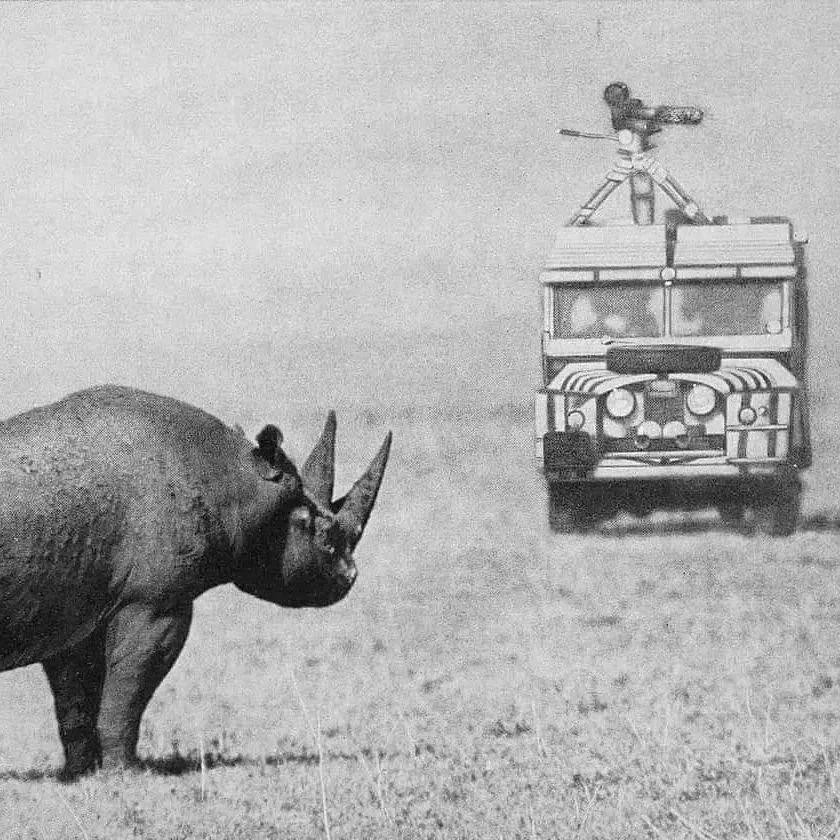
Just over a century ago, the ruins near Munge Stream in the northwest of the crater belonged to an impressive farm by contemporary colonial standards. It consisted of a stone-built farmhouse, a shed, and a stable, owned by Adolf Siedentopf, a German from the Prussian Province of Hannover. By 1913, Siedentopf employed four white overseers, fifty-eight Maasai, and several dozen Iraqw to tend to approximately 1,000 cattle, 2,500 sheep, 40 donkeys, and 12 horses. He shared the crater with abundant wildlife—contemporary estimates suggest as many as 20,000 wildebeest, 1,500 zebras, several thousand kongoni and other smaller antelopes, plus the occasional rhinoceros—and, until 1907, with several hundred Maasai pastoralists.
In 1904, Siedentopf petitioned the colonial government in Dar es Salaam to grant him pastureland in the crater for large-scale cattle ranching. Thanks to its altitude, Ngorongoro offered a mild climate, was free of tsetse flies, and was remote enough from the nearest governmental outpost to provide leeway for an enterprising settler. He was allotted 6,000 hectares of pasture with the obligation to stock it with 2,000 head of cattle. Depending on the success of his enterprise, Siedentopf was promised an additional 3,000 hectares for every 1,000 head of cattle, up to a total of 30,000 hectares. In early 1906, Adolf was joined by his brother Friedrich Wilhelm, who established a separate farm at the southeastern end of the crater near Lerai Forest.
The Siedentopf brothers were tasked with afforesting parts of the crater floor, improving its pasture, and converting sizeable portions into arable land. Within a few years, Adolf erected a stone farmhouse. Together, they introduced Australian eucalyptus and alfalfa, dug irrigation canals, created tracks for ox wagons, built kraals for livestock, and imported breeding cattle from Kenya and South Africa. However, their enterprise would not have prospered without hunting. Abundant elephants and wildebeest enabled them to engage in a flourishing regional trade in ivory and wildebeest tails. Ngorongoro’s wealth of wildlife effectively subsidized their fledgling farms, as much of their livestock was acquired through the proceeds of hunting.
In early 1914, Governor Heinrich Schnee announced plans to reopen the crater to private enterprise and agricultural development. Applicants for farmland began queuing, and a safari business launched by Friedrich Wilhelm Siedentopf had already started attracting globetrotting German hunters to the crater. By the summer of 1914, the distribution of farmland was well underway. The final decision about the crater’s future utilization remained pending, but had it not been for the outbreak of World War I, Ngorongoro might have been entirely divided into agricultural estates. The war halted land sales, and the advance of British troops in early 1916 ultimately forced the brothers to abandon the crater.
The rubble of the German farm in Ngorongoro serves as a reminder that today’s natural zoo was perceived very differently by Europeans a century ago. Until the late first decade of the 20th century, Europeans described Ngorongoro primarily in terms of its agricultural potential—a paradise for farmers. The imagery and rhetoric of a wildlife paradise only gained prominence after the removal of the Maasai. Above all, the traces left by the Siedentopfs—and later by figures like the Grzimeks—testify to the deep connections between German society and Ngorongoro’s nature and wildlife throughout the 20th century. Like the extensive sisal plantations at the base of the Pare Mountains, the remnant doorsteps in this wildlife paradise stand as a visible and lasting mark of German colonial rule on Tanzania’s environment.
Ngorongoro Crater
The main feature of the Ngorongoro Conservation Authority is the Ngorongoro Crater, the world’s largest inactive, intact and unfilled volcanic caldera. The crater, which formed when a large volcano erupted and collapsed on itself two to three million years ago, is 610 metres (2,000 feet) deep and its floor covers 260 square kilometres (100 square miles). Estimates of the height of the original volcano range from 4,500 to 5,800 metres (14,800 to 19,000 feet) high. The crater floor is 1,800 metres (5,900 feet) above sea level. The crater was voted by Seven Natural Wonders as one of the Seven Natural Wonders of Africa in Arusha, Tanzania, in February 2013. The Ngorongoro volcano was active from about 2.45 to 2 million years ago. Volcanic eruptions like that of Ngorongoro, which resulted in the formation of Ngorongoro Crater in Tanzania, were very common. Similar collapses occurred in the case of Olmoti and Empakaai, but they were much smaller in magnitude and impact.
Out of the two recent volcanoes to the northeast of the Empakaai caldera, Kerimasi and Ol Doinyo Lengai, Doinyo Lengai is still active and had major eruptions in 2007 and 2008. Smaller ash eruptions and lava flows continue to slowly fill the current crater. Its name in Maasai means ‘Mountain of God’.
The Munge Stream drains Olmoti Crater to the north and is the main water source draining into the seasonal salt lake in the center of the crater. This lake is known by two names: Makat as the Maasai called it, meaning salt; and Magadi. The Lerai Stream drains the humid forests to the south of the Crater and feeds the Lerai Forest on the crater floor – when there is enough rain, the Lerai drains into Lake Magadi as well. Extraction of water by lodges and Ngorongoro Conservation Area headquarters reduces the amount of water entering Lerai by around 25%.
The other major water source in the crater is the Ngoitokitok Spring, near the eastern crater wall. There is a picnic site here open to tourists and a huge swamp fed by the spring, and the area is inhabited by hippopotamuses, elephants, lions, and many others. Many other small springs can be found around the crater’s floor, and these are important water supplies for the animals and local Maasai, especially during times of drought. Maasai were previously permitted to graze their cattle within the crater, but as of 2015 were restricted from doing so.
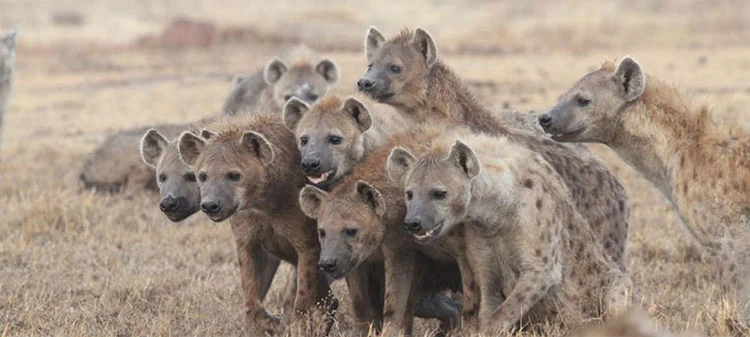 Spotted hyenas have a rather bad image and reputation among most tribes in East Africa. Unlike lions, spotted hyenas are not traditionally hunted by Maasai warriors or men of other tribes but may be killed if they attack livestock that get lost in the daytime or that are not locked up in enclosures at night. Hyenas are mostly killed by injecting a powerful poison into carcasses.
The Ngorongoro Crater is inhabited by eight spotted hyena clans. Clans currently consist of between 33 and 72 hyenas and total population size is at 382 individuals, including 295 adults.
Spotted hyenas are endurance hunters, that is, they don’t stalk their prey like lions or leopards, but hunt it to exhaustion. They are extremely well adapted to this strategy and their hunting success is high when they manage to pursue their prey over a long distance. They have exceptional stamina and their heart is very large for their body size
Spotted hyenas are the ‘health police’ of their ecosystem. They hunt weak prey, that are for example very young, old, or sick, but they can also consume carrion in advanced state of decomposition. Their outstanding immune system and their digestive system are perfectly adapted to feeding on carrion; hyenas can devour animals that succumbed to diseases that can be deadly to other species (including humans) such as anthrax. Their powerful jaws, highly acidic stomach, and enlarged and powerful premolars further enable them to crush and digest even the largest bones, such as those of giraffes and elephants. All this makes spotted hyenas a crucial component of the ecosystem.
Hyena-Cheetah -Lion-Leopard?
Overall, hyena-cheetah-leopard conflict is limited; reports suggest that hyenas steal only 9% of cheetah kills. While spotted hyenas are a threat to cheetah cubs, lions are actually the biggest competitor of both species. In areas with less lions, both hyena and cheetah numbers increase, partly due to an increase in juvenile survivorship. Cheetahs also hunt more often during the daytime when other large predators like hyenas and lions are less active which helps minimize conflict.
Spotted hyenas are the second most abundant large carnivore in Africa after the Black-Backed Jackal.
The estimated total global population of spotted hyenas ranges between 27,000 and 47,000. The largest spotted hyena population, estimated at 7,700 to 8,700, is in the Serengeti-Masai Mara ecosystem in Tanzania and Kenya.
 Earlier History
The dominant ungulate was once the Thomson’s gazelle but is now the Wildebeest. While Zebras have remained the same throughout. Why?
The population of Thomson’s gazelles in the Serengeti National Park, Tanzania has declined by almost two thirds over a 13 year period. In the early 1970s, numbers stood at 660,000 animals but had decreased to less than 250,000 animals in 1985. Predation, interspecific competition and disease are all factors that could have contributed to this decline, and at least one of these factors, predation, could now prevent the Thomson’s gazelle population from increasing.
In the early 1960s, the numbers of zebra and wildebeest in the Serengeti were about the same (ca. 200,000). Before then the populations of wildebeest and buffalo were limited by rinderpest, a viral disease. After its eradication in the early 1960s these two ruminant (Wildebeest and Buffalo) populations grew exponentially until limited by resources (or poaching) after 1980. The zebra population, which was unaffected by rinderpest, remained remarkably constant in size during this period and have remained at the same population level since.
In 1973 wildebeest numbers were 700,000 and Thomson’s gazelle 600,000. By 1977 the wildebeest had doubled in number (1.4 million) while the gazelle had halved (300,000).
Table Comparison Insights

- Zebras: Remarkably stable (~200,000-237,000), unlike the others. Predation (e.g., lions, hyenas) keeps their numbers in check despite resource availability.
- Thomson’s Gazelles: Sharpest decline (660,000 to ~150,000), dropping 75% by 1986 due to predation and wildebeest competition; stabilizes lower.
- Wildebeest: Boom post-1960s (250,000 to 1.4 million by 1977), then fluctuate (1.1-1.4 million); resilient but sensitive to droughts (e.g., 1993).
- Buffalo: Recover from rinderpest (~20,000 in 1960s to 60,000 by 1977), crash from poaching and drought (to ~25,000 by 1996), then rebound to ~50,000 with protection.