IF YOU TAKE ONE VACCATION THIS YEAR, MAKE IT COUNT!
From the blinding white of coral sand to the snows of Kilimanjaro, Tanzania has some of Africa’s most varied and dramatic natural environments giving it one of the greatest range of biodiversity in Africa - more land 28% of it devoted to wildlife conservation, greater concentrations of animals, phenomenal birdlife, pristine wilderness and a fascinating array of tribal cultures. Due to the tremendous topographical variation, virtually all the major habitats found elsewhere in Africa are represented in Tanzania the only exception being arid desert. You have THE ultimate safari experience than any other country on the continent to these famous destinations the Serengeti, Ngorongoro and the Selous (all of which are World Heritage Sites) Mt. Kilimanjaro, , Olduvai Gorge, Tarangrie National Park and Zanzibar...and many others..
health & safety
Are safaris in Tanzania safe?
You bet they are. Tanzania is one of Africa’s most stable countries. You’ll be welcomed by its friendly people and always taken care of by attentive staff. After full days of wildlife viewing, rest up at handpicked camps and lodges, which offer authentic African charm and modern-day conveniences.
What foods should we avoid?
It is relatively safe to eat most of the foods offered by lodges and camps as they take great care to ensure that food is prepared in a healthy manner. If you are worried about contracting a "stomach bug" don’t eat salads, avoid ice cubes in drinks, and eat only fruits that have thick skins which are peeled (oranges, bananas).
What about drinking water?
Although water in many cities and small towns is purified and safe to drink, it is wise to drink only bottled drinks which are readily available. In addition don’t swallow water during a shower and use purified water for brushing teeth. We provide free bottled water during all wildlife-viewing drives. You can also purchase bottled water at all lodges.
Are there a lot of bugs in Tanzania?
Deet-based repellents and citronelle-based products work well if you encounter mosquitoes or other small insects.
What shots or medicines do we need before traveling?
For most travelers a safari to Africa raises a number of red flags regarding health issues. For southern Africa (Botswana, Namibia, South Africa, Zambia and Zimbabwe) there are no required inoculations and health concerns are the same as those for travel to eastern Europe or the Caribbean. For east Africa (Kenya and Tanzania) health concerns and inoculations are the same as those for travel to South America or east Asia. The vast majority of traveler’s to Africa return from their safaris happy and healthy!
Malaria is endemic but preventable No matter where you travel in Africa (excepting parts of South Africa) a course of anti malaria tablets is essential and many doctors advise a dose of Hepatitis A vaccine Yellow fever vaccination is compulsory. We recommend that you visit with a local travel health specialist in your home town for further details.
Use insect repellent, cover up at sundown, sleep in a mosquito net and take anti-malaria prophylactics as advised by your doctor.
Bring prescription medicines, spare glasses, contact lenses and their solution, as well as sunscreen, a first-aid kit, a cream for bites/stings and a remedy for diahorrea.
Wildlife Viewing
Aren't wild animals dangerous?
While viewing wildlife there is a degree of danger as the behavior of wild animals cannot be guaranteed. However most animals are frightened by the sight / smell of humans and rather than attack, will flee (unless cornered or provoked). Attacks on humans are rare.
While on safari you will be accompanied by licensed guides who are well trained & armed with an amazing understanding of the wildlife with which they share their lives on a daily basis.
At your tented camp or lodge it is not uncommon for wildlife to wander through as camps & lodges are typically not fenced. An attack on a sleeping traveler would be highly unusual, occurring rarely when an animal has been frightened or provoked. Never venture outside your accommodations at night without your guide. Always consult with your guide/s when in doubt
Where is the best place to go for wildlife viewing in Africa?
Northern Tanzania! Ngorongoro Crater, a World Heritage Site, has one of the greatest concentrations of wildlife in the world. The vast plains of Serengeti National Park also host a myriad of wildlife, especially during the wildebeest migration.
What kinds of animals will I see on safari in Tanzania?
All kinds! You will see the animals you’ve always dreamed of encountering on safari—zebra, elephant, hippo, giraffe, lion, warthog, wildebeest, and so much more.
When is the best time of year to go on safari in Tanzania?
Tanzania has the best year-round wildlife viewing, and we adjust our itineraries, departure dates, and accommodations based on wildlife migration patterns. But Tanzanian safaris are best enjoyed during the period’s mid-December through the beginning of March and during the period June through mid-October each year.
What is the Great Migration?
The Great Migration is a year-round phenomenon where vast herds of mammals, mainly wildebeest, gazelle, and zebra, move around the Serengeti in search of food and water. The driving force of the migration is rain, making it difficult to predict.
What if I don’t see the Great Migration during my safari?
Hakuna matata! No worries! Plenty of awe-inspiring moments present themselves whenever you travel in Tanzania. Even if you don’t happen to see the Great Migration, you’ll still see an abundance of wildlife.
What type of vehicles are used on safari for wildlife viewing?
In Tanzania our safaris are conducted in closed Land Rovers/Land Cruisers seating 5-6 passengers (all with window seats) with a guide and have roof hatches for game viewing,there’s plenty of elbow room, access to the pop-up roof hatch, and a guaranteed window seat.
Clothes, Food & Weather
Can I have my clothes washed while on safari?
Most safari lodges and camps offer a complimentary laundry service (some have a small fee) weather permitting, however please note that undergarments are often excluded. You may wish to bring a small supply of liquid laundry soap (a small plastic travel bottle filled with Woolite works well for hand washing).
What type of baggage / luggage should I take?
If you are flying by small plane, use soft-all duffel bag instead of a hard suitacases, not exceeding 20kg. Please keep in mind that the hand-baggage compartments on the light aircrafts are only 25cm(10 inches) high.
What type of clothes should I take on safari?
When on safari it is best to wear grey, brown or khaki coloured clothing during the months July through October, and green clothing during the months November through June so as not to alert wildlife of your presence. White & other bright colours are definitely not recommended (blue and bright colors actually attracts tsetse flies! And black attracts mosquitoes). Camouflage clothing is not allowed.
Bring comfortable clothes that are cool, casual attire that you don’t mind getting dusty but that can layer to keep you warm at night or on game drives. During winter months (June through August in southern Africa) bring a pair of gloves and a warm hat as temperatures can drop to freezing!
It is also advisable to bring a pair of sandals, comfortable walking shoes, a swimsuit, and a hat to block the sun.
What’s the food like?
The food served at most upmarket safari lodges and tented camps is of the highest quality You’ll be pleasantly surprised by the quality and variety. In most lodges, meals are served buffet-style. The food is often prepared with western palates in mind (some local dishes are included).
Can special diets be accommodated?
With advanced notice, vegetarian, vegan, gluten-free, and diabetic-friendly meals can easily be arranged. Make sure to inform us when booking your trip.
What drinks are available on safari?
On most safaris drinks are not included in the all-inclusive daily rate. This includes bottled water, soft drinks, local beers, wines and spirits.
What’s the weather like in Tanzania?
East Africa and Tanzania enjoy one of the world’s most pleasant climates.
Weather and temperatures are generally mild year-round. However, it can be quite cold at the rim of the Ngorongoro Crater where wind, fog and heavy dews can be expected at any time of the year.
Evening temperatures can go down to 40 degrees farenheit(4.40 C) during June, July and August. In the rest of the country, from December to March, temperatures average in the high 70’s(210 c) and low 80’s (26.60 C) during the day, and 50’s (100 c) to 60’s (15.50 C) in the evening and early morning. From may-June to November, temperatures are about 6 to 9 degrees cooler. Zanzibar and Selous are more humid and much warmer.
Rain can occur at any time and its quite unpredictable, especially in recent years.The Long rains(masika in Kiswahili) are supposed to occur in Late March, April and May, while the short rains(called vuli) are expected from November to early December.
Safari Itineraries
Will I have a chance to interact with local people of Tanzania?
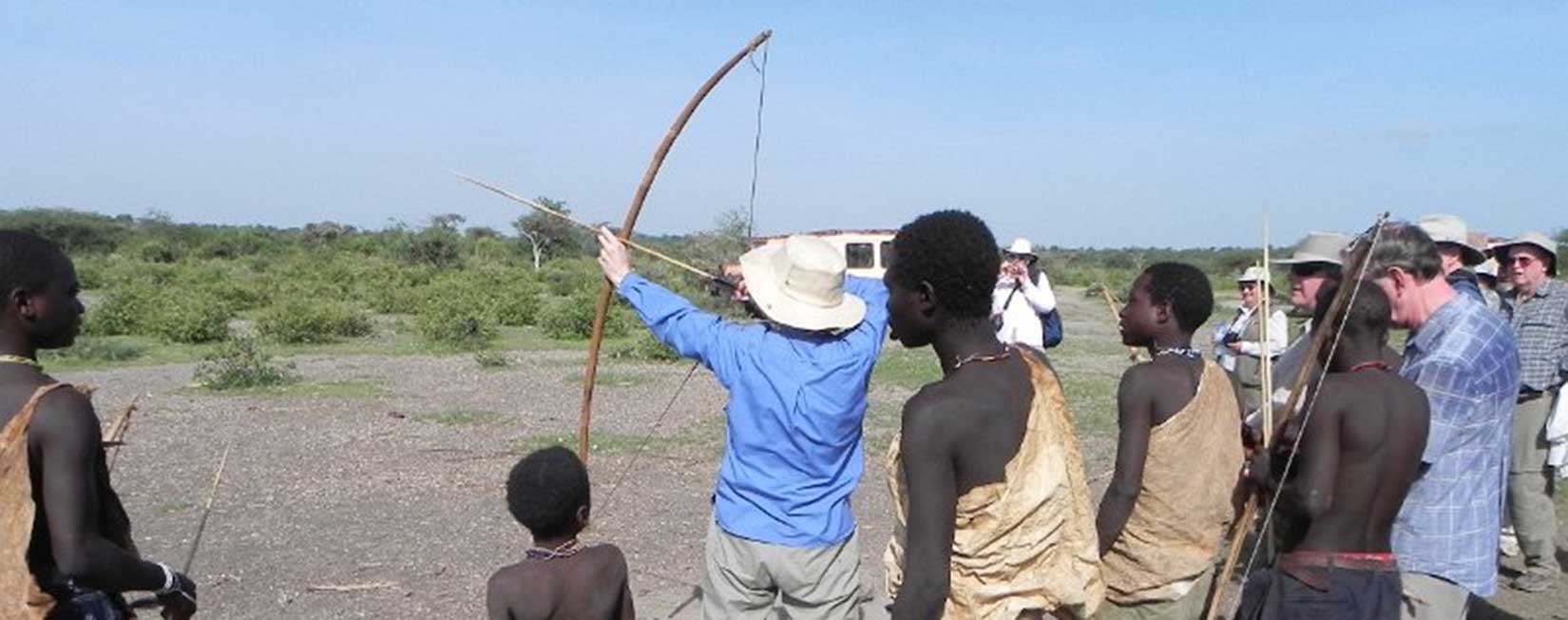
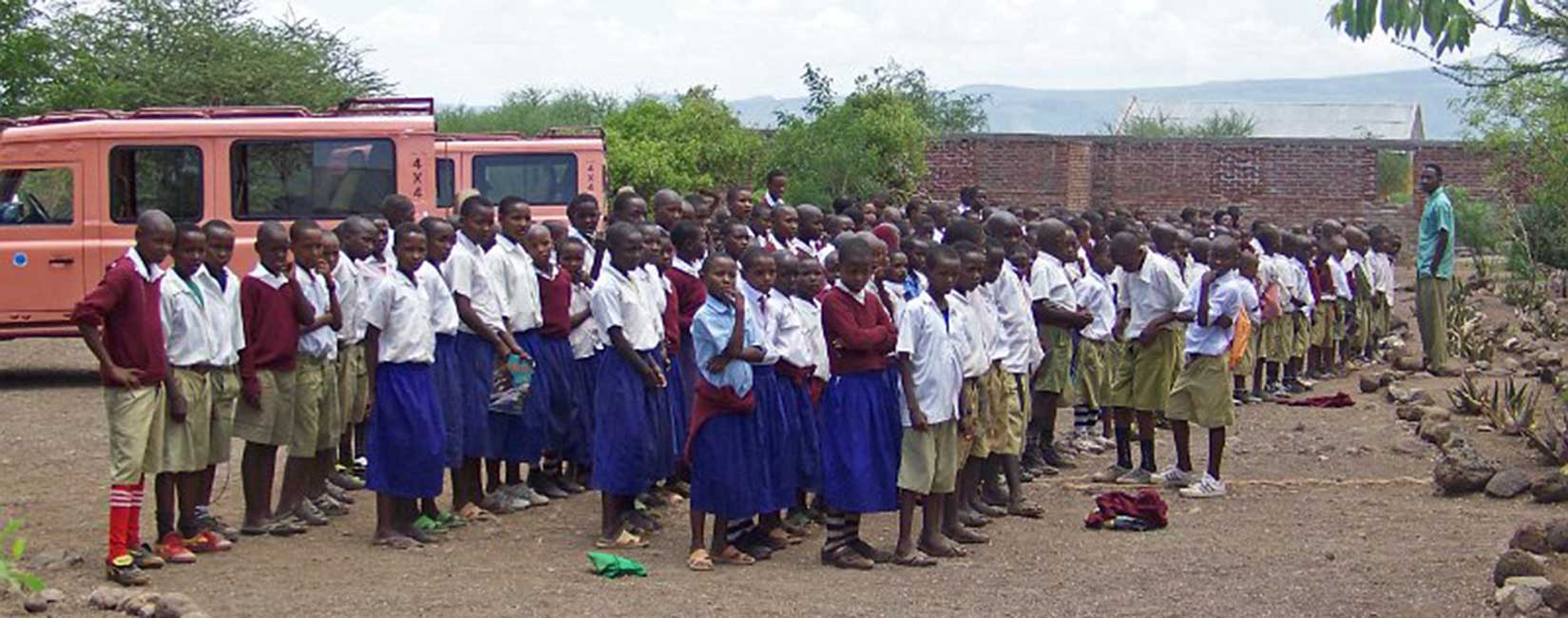
Many of our trips provide opportunities to visit local villages and interact with the people. However, if your itinerary does not include these visits, you’ll still gain valuable local insight from your expert guide, a native of Tanzania.
Can I make my own itinerary?
Absolutely. Just contact us to start the process. We’ll listen to your needs and give expert recommendations based on your interests, timeline, and budget. Leave the details to us!
Our family wants to enjoy a safari. Are children allowed on safari?
Of course! We think taking your whole family on safari is a wonderful way to learn and grow together
In east Africa traveling with children is quite easy as many lodges and camps have few restrictions.
The majority of safari lodges and camps in southern Africa have a minimum age limit of 8 years of age. There are however a few great lodges and camps that allow children under the age of 8.
Will I stay in tents or lodges?
At Arumeru, we know how important choice is when planning a trip. That’s why we offer an array of accommodation options. Do you want to stay in all tents? All lodges? A combination of both? It’s completely up to you. Make sure to check the accommodations section of our itineraries to see what’s offered.
What are the accommodations like?
Upmarket safari lodges and tented camps provide first class accommodations. Rooms have proper beds with mattresses and duvets, en suite (attached, in room) flush toilets, basins and showers with hot and cold running water. Other amenities include mosquito netting, lamps, purified water in carafes, insect repellent, flashlights, wardrobes, and ethnic furnishings.
While canoeing or while on a camping safari facilities are more limited. In some cases guests sleep on cots in dome tents and the camp toilet and shower are shared by group members. In other cases, on remote camping safaris, guests may overnight in sleeping bags with no toilet / shower facilities.
Will we be "roughing it" if we stay at a luxury tented camp?
Absolutely not! While staying at a luxury tented camp you will enjoy the comfort of a proper room with the sights and sounds of camping - the best of both worlds. Most tented camp rooms consist of very large walk in tents with Velcro or zippered entries to keep insects out. Walls are canvas with large roll up viewing sections. Inside you will enjoy a proper bed (usually 2 twin beds or a king) with pillows and duvets, bed side tables, dressing table, wardrobe, throw rugs or full carpeting, battery powered (solar) lighting, en suite (attached, in room) shower with hot and cold running water, flush toilet, and basin. Some tents even include baths!
Reservations & Trip payment
How far in advance should I book my safari?
We recommend booking as far in advance as possible to ensure your spot. This is especially important for travelers booking private safaris or adding extensions to their trips.
What additional costs can I expect when traveling with Arumeru Guides Tanzania?
Our safari land packages include all accommodations, meals, bottled water with meals and on wildlife-viewing drives, airport transfers, park fees, and services of guides and drivers.
Additional costs not provided may include: tips for your guides/drivers/staff, bar beverages, laundry service, phone calls, passport and visa fees, souvenirs, and travel insurance (if you choose to purchase).
How do we book a safari with you?
First you need to contact our office by email, and let us know when you would like to travel, how many people will be traveling, and the tour you are interested in. Please let us know your requirements and we will gladly make suggestions. With your input we can design a safari that suits your needs.
We will then check availability (this takes 24-48 hours as we check with the lodges and camps), and if space is available, we will make a provisional booking in your name. There is no obligation on your part at this stage.
Normally we can hold a provisional booking for 2 weeks within which time we will provide copy of the itinerary along with lodge / camp information, and allow you to decide if you wish to confirm your bookings.
Reservations are confirmed on receipt by Arumeru Guides of a 30% non-refundable deposit of the land cost per person depending upon which tour is booked (the deposit amount will be noted on each personalized itinerary).
Deposits may be made by wire transfer.
Your final trip payment is due 75 days prior to departure.
What if we have to cancel our safari plans?
All cancellations must be made in writing, signed by the client, to Arumeru Guides and all trips are subject to the following, per person, cancellation charges based on the number of days before trip departure that we receive your written cancellation request:
- More than 60 days: Loss of deposit
- Between 30 and 60 days: 50% of trip cost per person
- Less than 30 days: No refund of trip cost
There are no refunds for unused portions of the program, and refunds will not be made to clients who do not complete the tour for any reason whatsoever.
Our quotations are always based on the total number of people in your party, if anyone cancels for whatever reason, the prices will change.
Amendments made to the itinerary once paid for may result in additional costs
We encourage all travelers to purchase comprehensive travel insurance including trip cancellation and interruption coverage at the time of deposit. Some tours require comprehensive insurance coverage.
money & insurance
The local currency is the Tanzania Shilling. Major foreign currencies, especially Euro and US$, and Traveller’s Cheques are well accepted. They are convertible at banks or bureau de change in the main towns or in any tourist areas. Credit cards are not yet widely accepted and carry poor exchange rates.
The currency in Tanzania is the Tanzania Shilling. The US Dollar, however, is most widely used. Foreign currency can be exchanged for local currency at the banks and bureau de changes. Changing money on the streets is prohibited and dangerous.
- CASH: Older & torn notes are not readily accepted so we strongly recommend the newer series notes (year 2000 onwards). Smaller bills such as $1’s, $5’s, $10’s & $20’s have a lower exchange rate compared to $50’s & $100’s
- CREDIT CARDS: Although some hotels/curio shops accept Credit Cards. Credit Cards are not so widely used. In places that they can be used, surcharges of between 5-15% or more should be expected.
- TRAVELLERS CHEQUES: can sometimes be difficult to cash and in instances where credit cards may not be accepted, we recommend you bring enough US Dollar cash to cover all additional expenses you may incur.
- ATM's: Many major cities in Tanzania have ATM's (that accept Master card and Visa). A pin code is required, and the cash withdrawal limit is about US$300 per day which you receive in local Tanzanian Shillings
Travel insurance
All clients are required to purchase a comprehensive travel insurance plan before trip departure. This should cover you for events such as trip cancellation, delay or interruption, lost or delayed baggage, emergency accident, sickness and evacuation, accidental death, common carrier, 24 hour medical assistance, traveler's assistance, and emergency cash transfer.
Electricity & Roads
Tanzania and Kenya use the UK/European standard power supply of 220/240 voltages. If you want to use U.S. appliances you will need a voltage converter as well as a plug converter. However, we do suggest to bring with you battery-operated appliances if possible
Is there electricity at the safari lodges and camps?
Electricity in east and southern Africa (Tanzania, Kenya, Botswana, South Africa, and Zimbabwe) is 220/240 volts. Most safari lodges and camps are not connected to an electrical supply. Solar lighting (backed up by batteries) is common, with many lodges having a generator which runs part of the day (morning and late evening). Lanterns also provide light at night. In most areas you will not be able to use a hairdryer or electric shaver.
Will I be able to recharge my video camera batteries?
If a camp or lodge is connected to electricity mains or has a generator you may be able to recharge your video batteries. Many camps and lodges have the correct adapter plugs however we recommend that you bring your own plug and converter. One of the best options for recharging video batteries is an adapter allowing you to recharge from a vehicle battery. You can also charge them in our safari vehicles as they are fitted with inverters
ROADS?
Distances in Tanzania are vast and most of the roads are not asphalted. Except on the main roads connecting Nairobi, Arusha, Moshi, Marangu, Makuyuni, Mto-wa-Mbu and Karatu. Expect hard driving conditions, especially during the rainy seasons.
In Tanzania vehicles circulate on the left and a valid International Driving License is compulsory should you wish to self-drive.
Speed limits are 80km/h on all main asphalted roads, 50km/h in towns and villages and 30km/h in the proximity of schools. Within the National Park or in the Conservation Area a speed of 30 to 40km/h is advised.
Shopping & Gifts
What is there to buy in Africa?
Shopping while on safari is limited. Often lodges and camps have small curio shops where you can buy postcards, local goods such as carvings or books, clothing (hats, shirts), and film. At Arusha town you will find African curio markets where you can by all sorts of carvings, masks, drums, jewelry etc...in general souvenirs and curios are inexpensive (in US dollar terms) - still, fun spirited bartering is the norm.
In most cities there are upmarket jewelers and art galleries where you can easily spend hundreds, even thousands, of dollars on African art.
Most reputable shops offer shipping of your purchase at extra cost.
Gifts
Don’t give indiscriminately pens, money or sweets like a wealthy Western Santa Claus , it just encourages begging. As anywhere else, a gift should be given as a true expression of friendship, appreciation and thanks!